Attainable Audi Excellence

Cargazing
By Derek Price

The 2025 Audi A3 Quattro succeeds in a challenging mission: providing an authentic taste of the Audi experience without requiring luxury-car pricing.

As an entry point to the brand, it strikes a careful balance between premium aspirations and practical realities, delivering genuine driving satisfaction while acknowledging the compromises inherent in its segment.

The most significant improvement for 2025 comes from the powertrain upgrades. The turbocharged 2.0-liter four-cylinder now produces more torque and feels notably peppier than its predecessor.

The engine responds eagerly to throttle inputs, providing the kind of immediate acceleration that makes merging and passing genuinely enjoyable. The seven-speed S tronic transmission shifts smoothly and quickly, contributing to the overall sense of refinement.

Handling characteristics lean decidedly toward the sporty side of the spectrum. The steering feels precise and well-weighted, providing confidence through corners while remaining manageable in daily driving.

The suspension tuning prioritizes control over comfort, resulting in a firm ride that communicates road surface details clearly. This approach favors enthusiastic driving over long-distance comfort, which may not suit all buyers but aligns with Audi’s sporting pretensions.

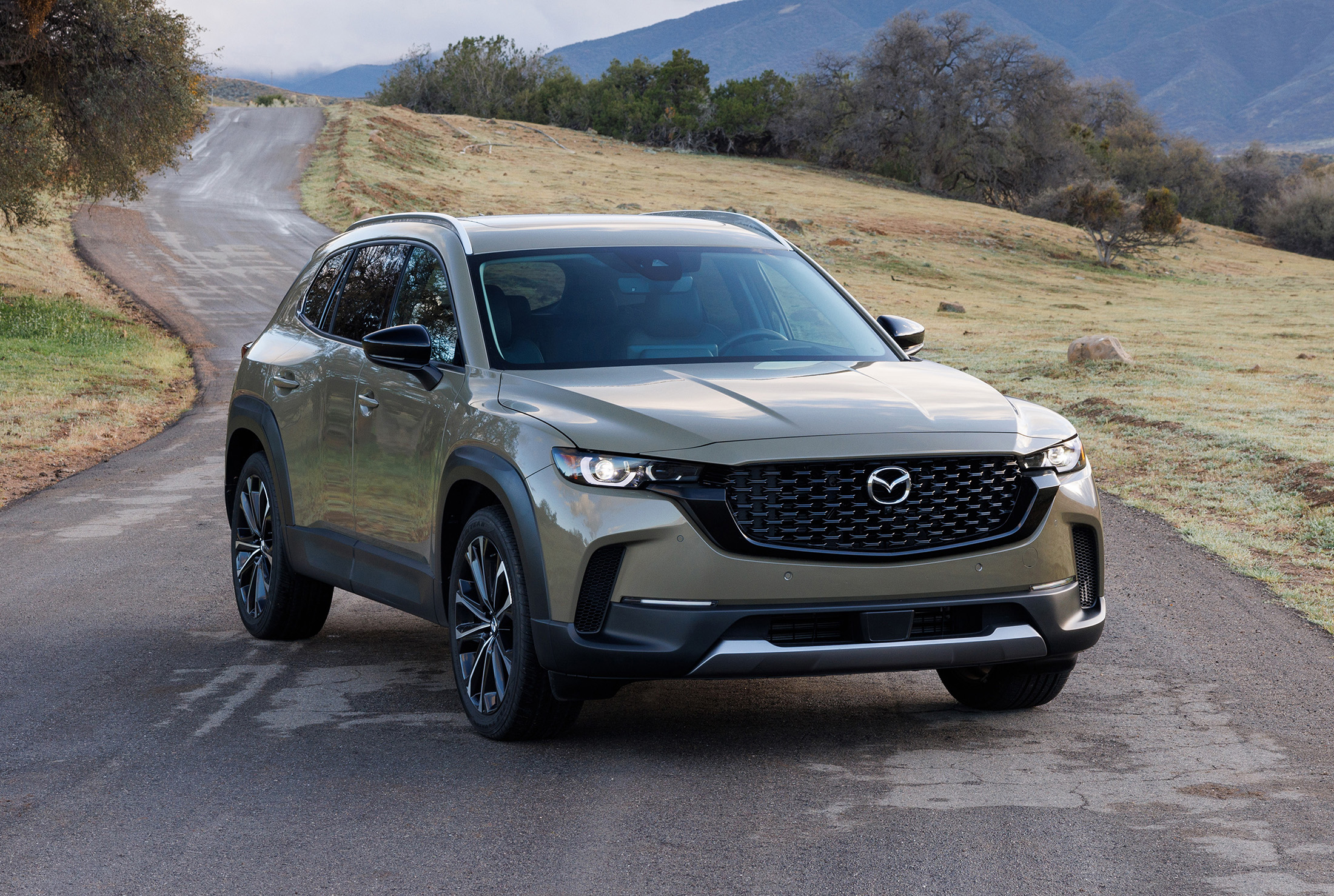
The 2025 A3’s refined exterior design incorporates Audi’s signature styling cues while maintaining the proportions necessary for urban maneuverability and parking convenience.

Perhaps the most impressive aspect of the A3 Quattro is its standard all-wheel drive system. At this price point, most luxury competitors offer front-wheel drive as standard, making quattro a significant competitive advantage.

The system provides reassuring traction in adverse conditions while enhancing cornering stability during spirited driving.

Fuel efficiency proves surprisingly impressive despite the performance-oriented character. Real-world driving consistently delivers a range exceeding 400 miles per tank, even with an aggressive driving style in my week of testing. This combination of efficiency and performance represents one of the A3’s strongest selling points.

Interior space reveals the inevitable compromises of the compact luxury segment. Rear seat legroom feels tight for adult passengers, while trunk capacity limits cargo carrying.

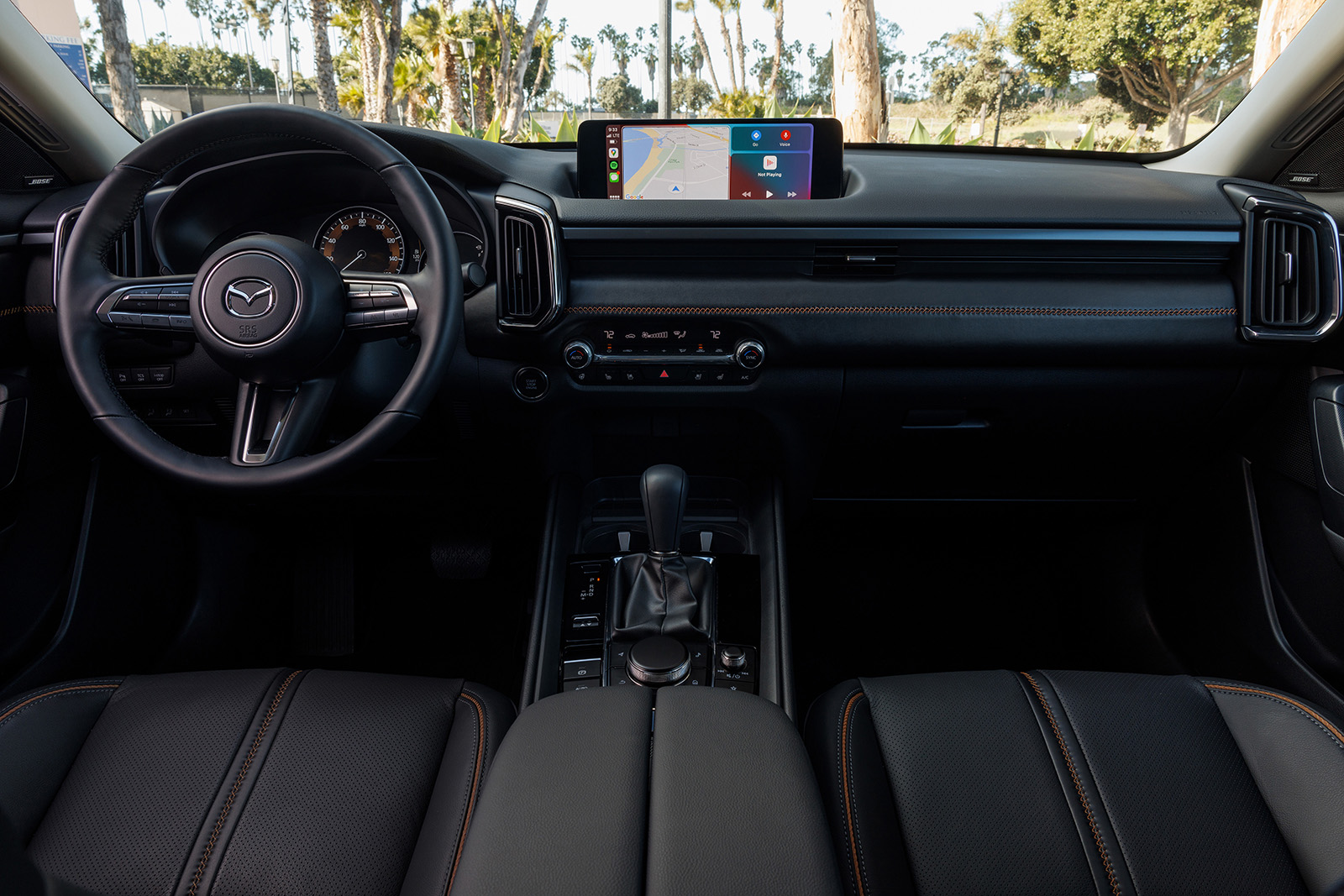
The A3’s cabin balances premium materials and technology with the space constraints of the compact luxury segment, prioritizing driver-focused ergonomics and build quality.

Road noise intrudes more than expected in a premium product, though the level remains acceptable for the price point. The cabin materials and build quality feel appropriately upscale, with logical control placement and intuitive tech.

At $46,040 as tested, the A3 represents solid value in the luxury compact segment. The extensive option list allows buyers to customize the experience, though the base model includes generous standard equipment. The pricing strategy positions the A3 as an accessible entry point to Audi ownership without feeling stripped or compromised.

The compromises are real and worth acknowledging, though. Space limitations, firm ride quality and elevated road noise represent trade-offs inherent in the segment. However, these concerns feel proportionate to the pricing rather than glaring deficiencies.

For buyers seeking an introduction to German luxury without the associated financial commitment, the A3 Quattro delivers authentic Audi character in an approachable package.

At A Glance

WHAT WAS TESTED?

2025 Audi A3 Quattro ($38,200). Options: Premium paint ($595), Premium Plus package ($2,600), black optic package ($1,750), technology package ($1,600). Price as tested (including $1,295 destination charge): $46,040

BY THE NUMBERS

Wheelbase: 103.7 in.
Length: 177.3 in.
Width: 78.1 in.
Height: 56.2 in.
Engine: 2.0-liter turbocharged four cylinder (201 hp, 236 lbs. ft.)
Transmission: Seven-speed automatic
MPG equivalent: 24 city, 34 highway

RATINGS

Style: 7
Performance: 8
Price: 6
Handling: 9
Ride:6
Comfort: 6
Quality: 7
Overall: 7

WHY BUY IT?

The A3 Quattro offers an entry-level Audi experience with standard all-wheel drive, engaging performance and impressive efficiency.

Posted in Audi

Sports Car Perfection

Cargazing
By Derek Price

The 2025 Mazda MX-5 Miata RF represents something increasingly rare in today’s automotive landscape: a vehicle designed to excel at one specific mission without compromise.

In an era when manufacturers chase broader appeal through added size, luxury and convenience features, Mazda has steadfastly refused to dilute the Miata’s essential character — a commitment that has created one of the most enduring sports car formulas in automotive history.

Behind the wheel, the connection between driver and machine feels immediate and organic.
The Skyactiv-G 2.0-liter four-cylinder engine produces 181 horsepower and 151 pound-feet of torque, with a thrilling 7,500 rpm redline.

These figures sound modest on paper but feel perfectly calibrated for the lightweight chassis.

Power delivery is linear and predictable, building smoothly through the rev range while the six-speed manual transmission offers crisp, precise shifts that encourage frequent gear changes and redline chases.

What truly distinguishes the Miata from virtually every other sports car is its ability to make ordinary drives feel special.

The steering weight builds naturally as speeds increase, providing genuine feedback about road surface and tire grip. The suspension strikes an ideal balance between comfort and control, absorbing road imperfections while maintaining the taut responses that make canyon roads irresistible.

The latest Miata maintains the classic roadster proportions while the retractable hardtop adds versatility without compromising the car’s clean aesthetic lines.

The RF (Retractable Fastback) variant tested here addresses one of the traditional roadster compromises.

The power-folding hard top transforms the driving experience dramatically, creating a quiet, refined cabin when closed that makes daily driving genuinely pleasant.

Road noise drops to civilized levels, eliminating the fatigue associated with soft-top convertibles during longer journeys. When opened, the top stows cleanly without compromising the car’s elegant proportions.

As someone who has owned a 1994 Miata for years, I can see that the fundamental appeal of this formula remains unchanged. That first-generation car captured something magical about the pure sports car experience — lightweight construction, perfect balance, and an almost telepathic connection between driver and machine.

The joy of rowing through gears, feeling every nuance of the road surface and experiencing the mechanical symphony of a naturally aspirated engine never grows old.

After decades of driving that original car, it’s remarkable how Mazda has preserved those essential qualities while adding modern refinement.

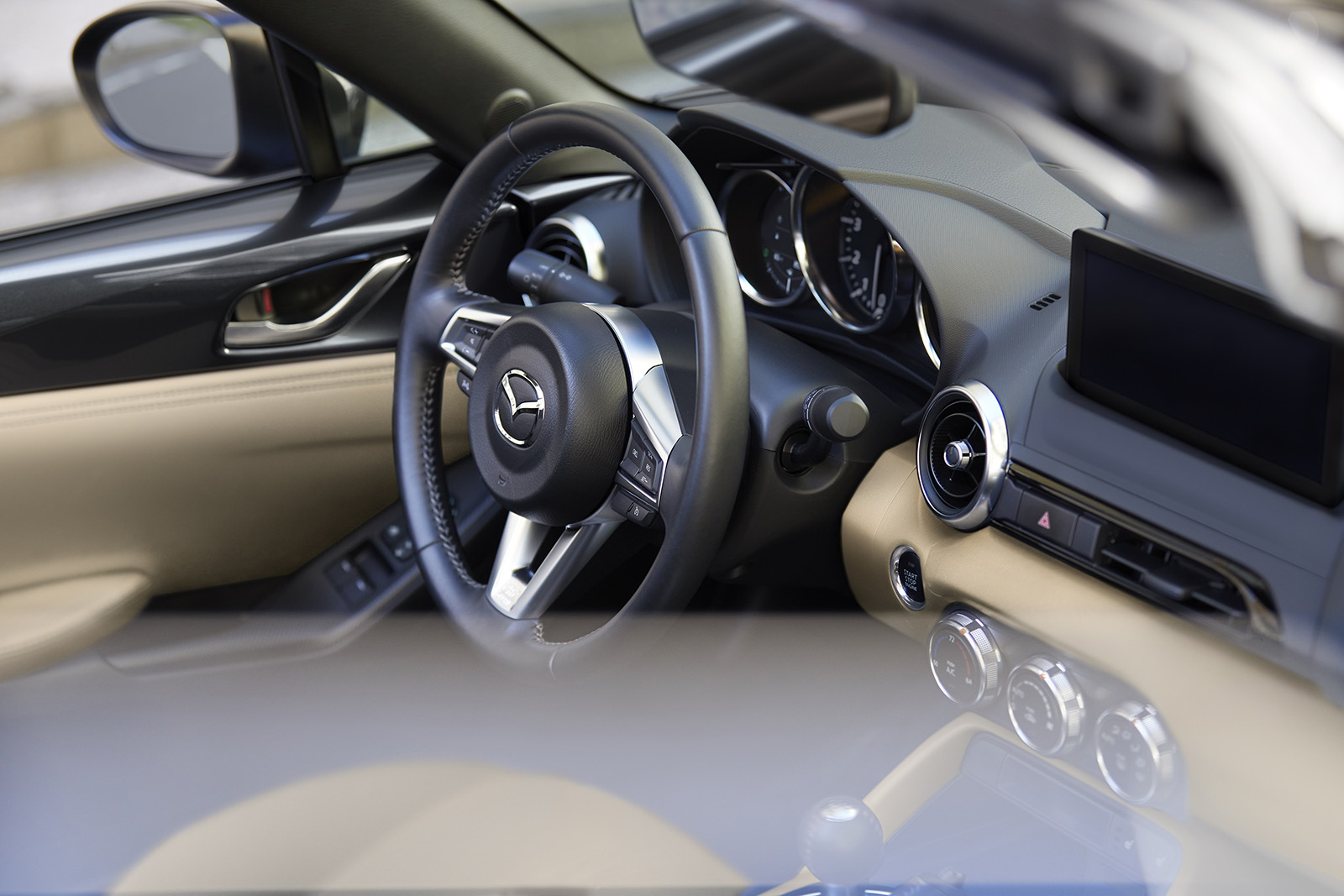
The Miata’s purposeful cabin places the driver at the center of the experience, with intuitive controls and a low seating position that enhances the connection between car and driver.

This current generation represents the finest evolution of the original concept since that 1989 debut. Rather than succumbing to focus group demands for more size, power or luxury, Mazda has refined the fundamental formula through their philosophy of kaizen — continuous improvement.

Interior space remains tight by conventional standards, but every surface feels purposefully designed rather than compromised. The driving position places you low and centered, with major controls falling naturally to hand.

Material quality exceeds expectations for the price point, though luxury amenities remain minimal by design — exactly as they should be.

Few modern vehicles manage to feel like living, breathing entities rather than sophisticated appliances.

The Miata achieves this connection through careful engineering and unwavering commitment to its core mission. It represents automotive purity in an increasingly complex world, continuing a 35-year tradition of making every drive an event worth savoring.

At A Glance

WHAT WAS TESTED?

2025 Mazda MX-5 Miata RF ($40,650). Options: Premium paint ($595). Price as tested (including $1,185 destination charge): $42,430

BY THE NUMBERS

Wheelbase: 90.9 in.
Length: 154.1 in.
Width: 59.2 in.
Height: 49 in.
Engine: 2.0-liter four cylinder (181 hp, 151 lbs. ft.)
Transmission: Six-speed manual
MPG equivalent: 26 city, 34 highway

RATINGS

Style: 10
Performance: 7
Price: 9
Handling: 10
Ride:5
Comfort: 3
Quality: 9
Overall: 10

WHY BUY IT?

The 2025 Miata delivers an uncompromised sports car experience that prioritizes driver connection and pure enjoyment over everything else.

Posted in Mazda

Electric Excellence

Cargazing
By Derek Price

The 2025 Hyundai Ioniq 5 represents electric vehicle maturity in its finest form.

After years of compromises, half-measures and learning curves, Hyundai has delivered an EV that feels genuinely premium while addressing the practical concerns that have kept many buyers on the sidelines.

The driving experience immediately announces this vehicle’s serious intentions. With 320 horsepower from dual electric motors in my AWD tester, acceleration feels effortless and instantaneous, delivering the kind of smooth, silent thrust that makes gasoline engines feel antiquated.

The 2025 Hyundai Ioniq 5’s angular, futuristic design creates genuine road presence while maintaining clean proportions that should age well over time.

The ride quality strikes an excellent balance between comfort and control, absorbing road imperfections without wallowing while maintaining composed handling through corners.

Perhaps most importantly for real-world usability, the 2025 Ioniq 5 adopts Tesla’s North American Charging Standard (NACS) port. This seemingly small change represents a massive leap forward in charging convenience.

Access to Tesla’s extensive Supercharger network works seamlessly, eliminating the reliability concerns that have plagued other charging networks. The charging experience feels polished and predictable rather than an exercise in frustration, at least in the Supercharger locations I visited.

The exterior design continues to turn heads without venturing into overwrought territory. Hyundai’s angular, futuristic styling manages to look both contemporary and timeless, suggesting this vehicle won’t appear dated in a few years.

The Ioniq 5’s spacious cabin features premium materials and intuitive technology.

The spacious cabin benefits from the dedicated EV platform, offering generous room for passengers and cargo alike. However, the front trunk storage area proves disappointingly small, limiting its usefulness.

Technology integration feels thoughtfully executed rather than overwhelming. The infotainment system responds quickly and includes wireless smartphone integration as standard.

At nearly $60,000 as tested, the Limited trim isn’t inexpensive, but the feature content and overall execution justify the premium. This represents one of the most complete electric vehicles available today, successfully balancing performance, efficiency, technology and usability without significant compromises.

The Ioniq 5 succeeds where many EVs have stumbled by feeling like a complete, mature product rather than an interesting experiment.

At A Glance

WHAT WAS TESTED?

2025 Hyundai Ioniq 5 AWD Limited ($58,100). Options: Carpeted floor mats ($210). Price as tested (including $1,475 destination charge): $59,785

BY THE NUMBERS

Wheelbase: 118.1 in.
Length: 183.3 in.
Width: 74.4 in.
Height: 63 in.
Power: Dual electric motors (320 horsepower hp)
Transmission: Continuously variable
MPG equivalent: 108 city, 88 highway

RATINGS

Style: 9
Performance: 9
Price: 6
Handling: 7
Ride: 7
Comfort: 8
Quality: 8
Overall: 8

WHY BUY IT?

The Ioniq 5 offers exceptional performance, premium quality and seamless charging access in a package that eliminates most traditional EV compromises.

Posted in Hyundai

Reviews

[GARD]