

Cargazing
By Derek Price
The 2026 Hyundai Ioniq 9 makes a strong first impression before you even glance at a spec sheet.
It drives like a confident, well-sorted family hauler that just happens to be electric, which is exactly what Hyundai was aiming for as it positions this as its premium flagship.
Hyundai’s EVs have been good for a while, but this one feels like the company stepping deeper into luxury territory. It pulls away with instant smoothness, and the dual-motor setup delivers the kind of quick, seamless acceleration that makes merging easy.
Around town, it responds immediately to the throttle and feels lighter than it looks. On the highway, it stays impressively quiet, tamping down wind and tire noise to a level that rivals some luxury brands.
Ride quality is another highlight. It’s cushy without being floaty, and it manages bumps in a way that keeps everyone content over long trips.
Even driven briskly, it holds its composure and feels secure, traits that matter more in a three-row SUV than outright speed. The 311-mile range on the Performance AWD model is impressive for something this large.
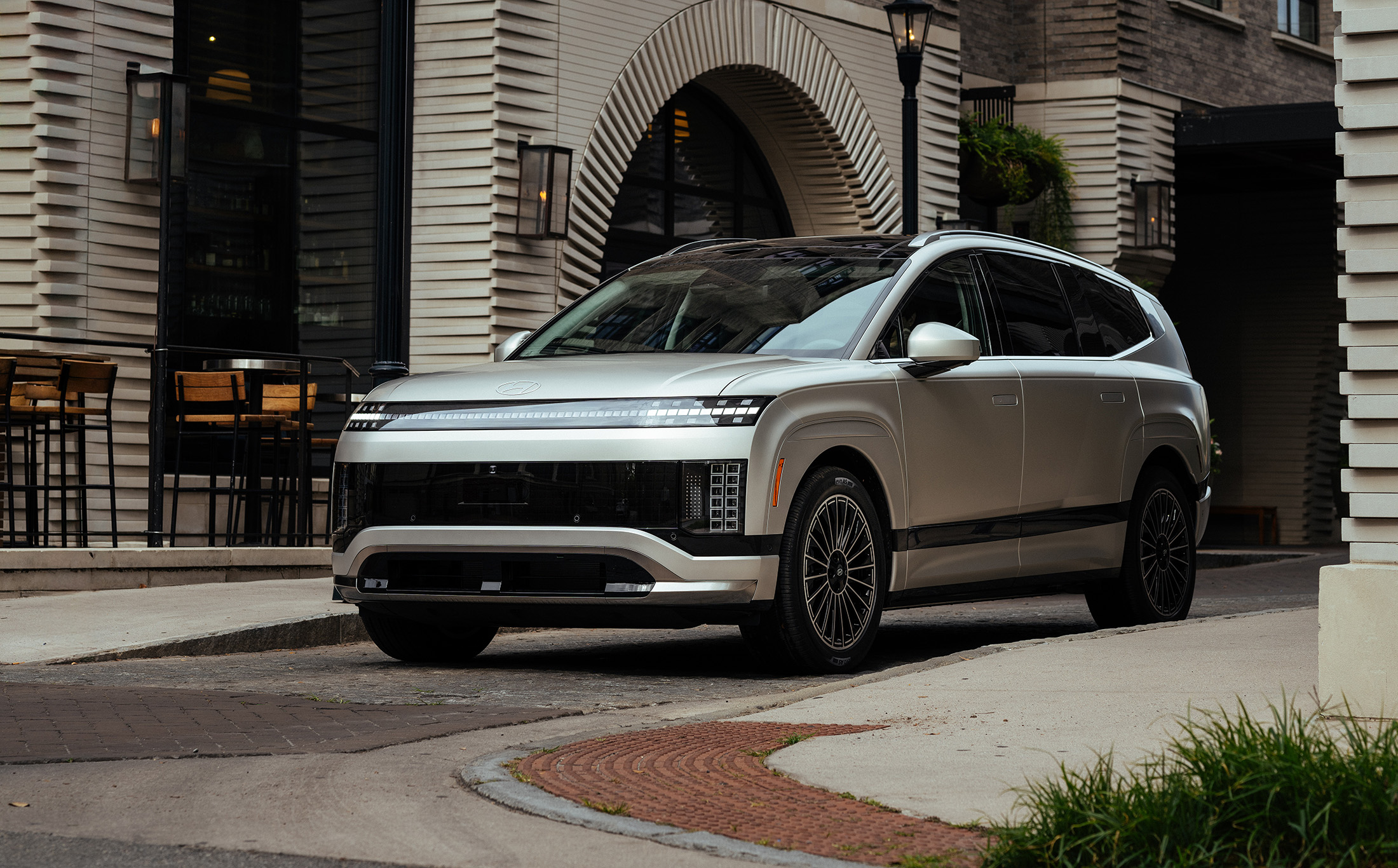
The Ioniq 9’s bold, upright shape pairs clean lines with distinctive pixel lighting.
The interior is where Hyundai’s upscale ambitions really show. The materials feel soft and substantial, and the layout avoids the cold minimalism some EVs lean on.
Everything is logical and easy to reach. The center display responds quickly, and the digital cluster is clear and attractive.
Driver-assistance features are just as impressive. Highway Drive Assist centers the vehicle with minimal fuss, and on well-marked roads it can pilot itself with only light supervision.
It reduces fatigue on long drives and feels more natural than some competing systems that tug at the wheel or ping-pong within lane lines.
Practicality is the Ioniq 9’s biggest selling point. Three rows of seats and a wide, open cabin make it feel more like a living room on wheels than a typical crossover.
Adults can ride in the third row without complaint, and there’s real cargo room with the seats folded. The flat floor frees up legroom in every direction, and the sliding console helps front-row passengers move around more easily.
This is the rare EV that truly works as a family vehicle instead of a statement piece.
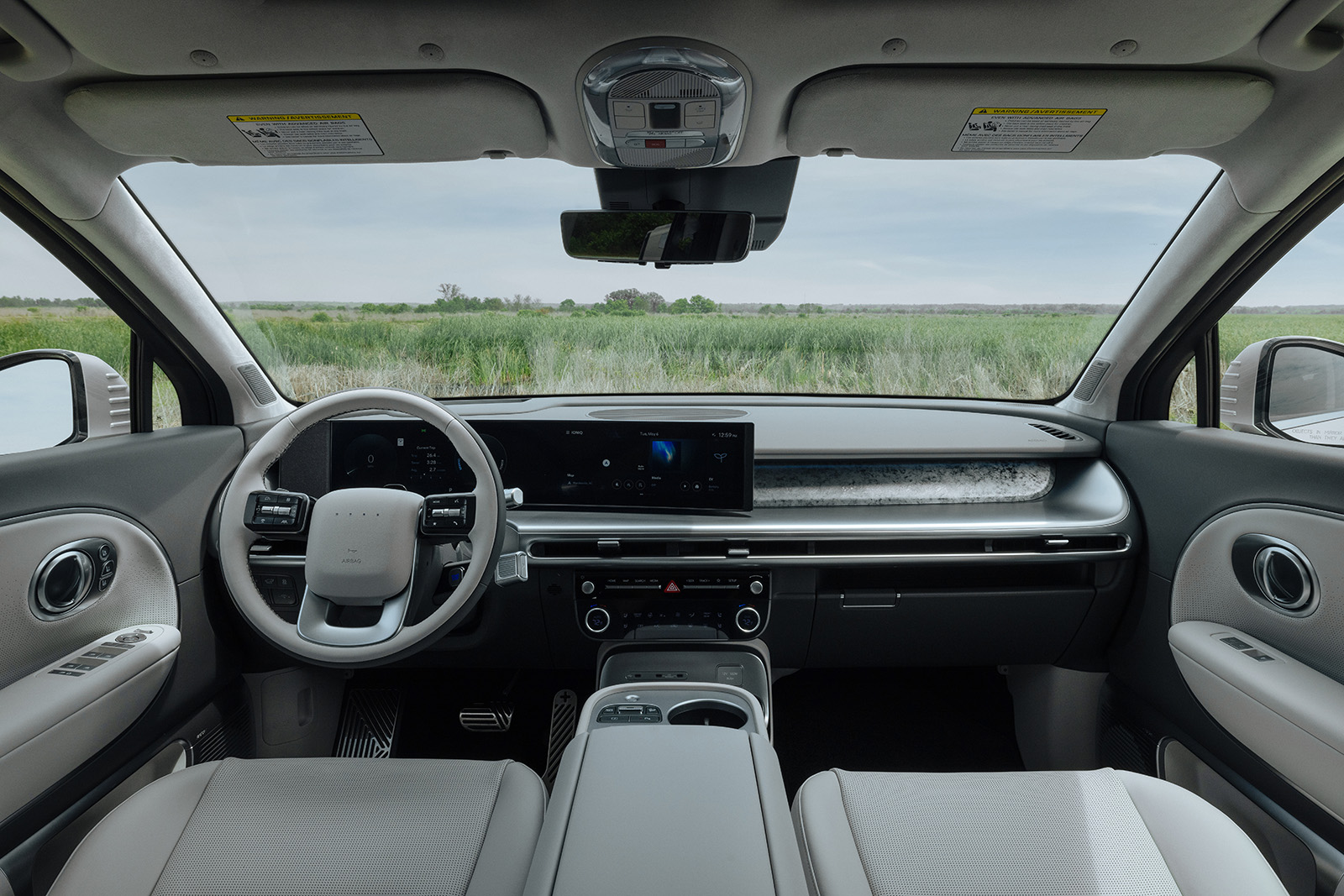
A wide, airy cabin offers soft materials, intuitive tech and generous three-row space.
Though the Ioniq 9 aims at the luxury segment, its pricing pushes the boundary. My test vehicle rang up at $77,540, and that included $230 for carpeted floor mats. At that price, those should really be included. Hyundai is far from alone in charging for small items, but it still feels off for a nearly $80,000 vehicle.
Charging is quick thanks to 800-volt architecture, and the standard NACS port gives it access to Tesla Superchargers. Hyundai building the Ioniq 9 in Georgia adds another advantage: it’s positioned to qualify for federal tax incentives if they’re ever reinstated, which could help soften the sting of that sticker price.
Competition in the electric three-row segment is growing, but Hyundai makes its case with comfort, range and ease of use.
Some rivals offer flashier badges or more performance, yet the Ioniq 9’s strength is how naturally it fits into daily life. It doesn’t ask you to adapt to EV ownership as much as it blends into whatever routine you already have.
The Ioniq 9 feels like a family-first EV with genuine refinement. For buyers who want space, comfort and modern tech, it’s one of the most well-rounded electric SUVs available.
At A Glance
WHAT WAS TESTED?
2026 Hyundai Ionia 9 AWD Performance Calligraphy ($74,990). Options: Premium paint ($500), carpeted floor mats ($230), vehicle load adapter ($220). Price as tested (including $1,600 destination charge): $77,540
BY THE NUMBERS
Wheelbase: 123.2 in.
Length: 199.2 in.
Width: 78 in.
Height: 70.5 in.
Power: Dual electric motors (422 combined hp)
Range: 311 miles
MPGe: 91 city, 79 highway
RATINGS
Style: 9
Performance: 9
Price: 4
Handling: 7
Ride: 8
Comfort: 8
Quality: 8
Overall: 9
WHY BUY IT?
The Ioniq 9 is a quiet, roomy, genuinely premium electric family SUV that feels effortless to live with.